Development of decision-making tools for cost-efficient irrigation – Cost-Efficient Irrigation (CEFIR)

Duration 01.07.2025 - 31.12.2027
Management Zimmermann, Beate, Direktorin
Processing Schlepphorst, Rainer, Winkler, Pauline,
Category Landwirtschaft ,
Keywords Decision support system, economic efficiency, Irrigation,

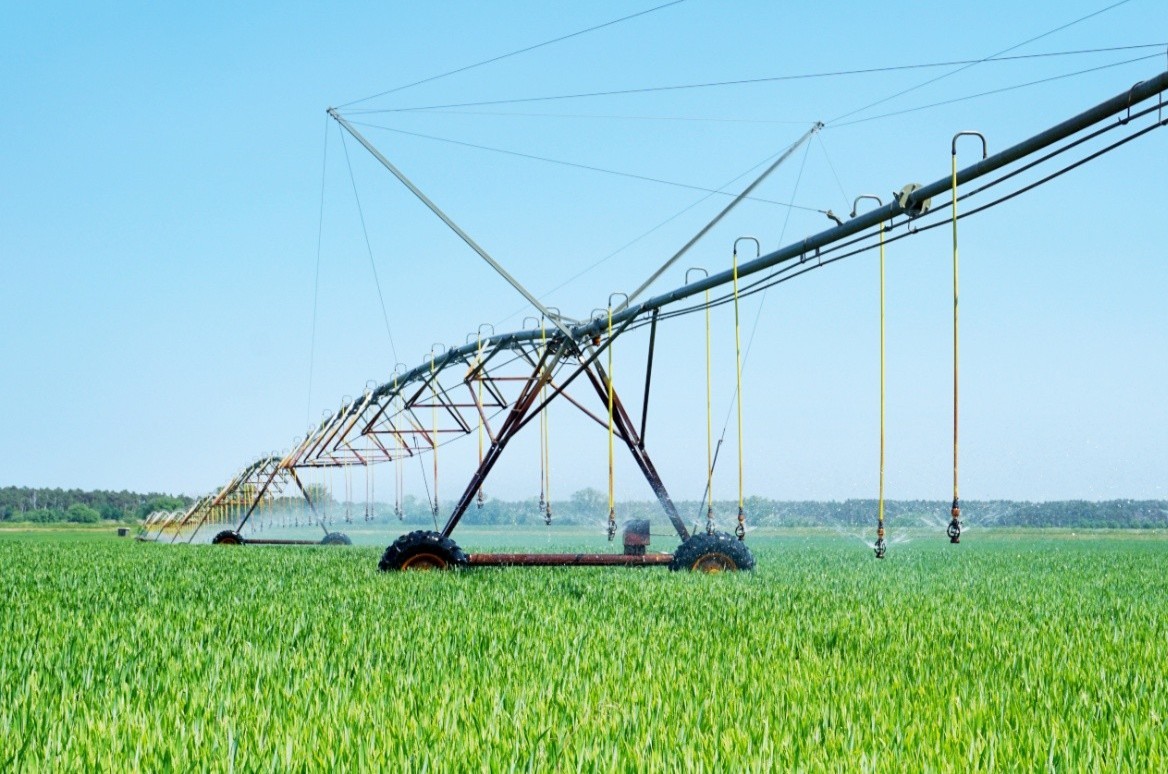
Irrigation of agricultural crops ensures the survival of farms in times of increasing drought. Irrigation companies are constantly faced with the challenge of balancing the agronomic necessity of specific irrigation measures with their economic viability. Particularly in the case of crops that are important in Brandenburg, such as winter wheat, winter barley and maize, irrigation is not always economically viable.

The project ‘Development of decision support tools for cost-efficient irrigation – Cost-Efficient Irrigation (CEFIR)’ aims to assess the economic viability of irrigation before irrigation is used. The decision support system (DSS) to be developed will be made available as an easy-to-use web app and will also be integrated into an existing app for irrigation control. The development is being carried out in collaboration with agricultural businesses, which are providing fields with circular irrigation systems for practical testing. Agricultural field irrigation can become more cost-efficient and sustainable with the DSS.

Partner

The operational group in the project consists of seven partners from science, industry, agriculture and consulting:

  • Forschungsinstitut für Bergbaufolgelandschaften e.V. (FIB, Leadpartner und Koordinator)
  • Fürstenwalder Agrarprodukte GmbH Beerfelde
  • Gollwitzer Agrar GmbH
  • Hydro-Air international irrigation systems GmbH
  • IT-Direkt Business Technologies GmbH
  • Landwirtschaftliche Beratung der Agrarverbände Brandenburg GmbH
  • Öko-Landbau Canitz GbR.


Project Funding

Funding is provided by the European Innovation Partnership for Agricultural Productivity and Sustainability (EIP-AGRI), a European Union (EU) funding programme, and by the State of Brandenburg (MLEUV).

Network for Renewable Raw Materials in the State of Brandenburg – Neuwerg

Duration 01.01.2025 - 31.12.2027
Management Zimmermann, Beate, Direktorin
Processing Rademacher, Anne, Lukas, Stefan, Schlepphorst, Rainer,
Category Forests , Landwirtschaft ,
Keywords bioeconomy, circular economy, regional value creation, renewable resources, sustainability,

In November 2021, the “Network for Renewable Raw Materials in the State of Brandenburg” (NNR-BB) was established at the Research Institute for Post-Mining Landscapes (FIB) to increase the cultivation and processing of renewable raw materials (NAWARO) in Brandenburg. Operated under the name Neuwerg, this non-profit platform aims to promote the material and energetic use of agricultural industrial raw materials and to unlock “hidden” innovation potential.

The main objective is to increase production and value creation based on renewable raw materials (NAWARO) and to close regional material cycles. In addition, the aim is to promote crops and products that can be produced in a climate-adapted and climate-neutral way, while also conserving soil and reducing environmental impact. The cultivated NAWARO should ideally replace high-value industrial raw materials, preferably through regional use and largely closed material cycles.

Given the natural conditions in Brandenburg, systems for biomass cultivation on low-yield sites must also be taken into account. These are areas with natural limitations where the usual arable crops cannot generate any, or only minimal, contributions to covering costs and thus do not pose significant competition to food production.

The spectrum ranges from innovative crops and cultivation methods adapted to climate change, to biotechnologically produced chemicals and biomaterials, natural building and construction materials, cosmetics, cascade-like production lines and combined uses, all the way to climate-neutral energy generation and the closed-loop management of residual materials. To achieve this, Neuwerg supports new business fields, value chains, and environmentally friendly products with a strong commitment to sustainability – fully in line with the SDGs (Sustainable Development Goals, Agenda 2030) of the United Nations.

1) Neuwerg is an artificial word that refers to the term “ Werg”, which originates from the processing of flax and hemp fibers. The protected brand name is licensed for exclusive use – www.neuwerg.de.

Key areas of focus in our network activities include:

  • “Hub” – establishing and operating the online platform https://neuwerg.de to facilitate partner matchmaking, illustrate potential value chains for and through NAWARO, foster exchange among stakeholders, and provide information on events, news, literature, and media resources.
  • “Bridge function / connecting link” – facilitating knowledge transfer and information flow through specialist events, promoting exchange and networking among stakeholders, and raising the network’s visibility in Brandenburg and adjacent federal states through public relations.
  • “Representation” – identifying and showcasing best-practice examples for NAWARO, as well as promising project ideas, pilot initiatives, and flagship endeavors.
  • “Support” – fostering innovative business models by providing consulting services on opportunities and barriers, market assessments, reflection on practical experiences, as well as specialized and methodological input tailored to each individual case.

The focus is on agricultural and forestry businesses, NAWARO-processing companies and product manufacturers, as well as trading and marketing businesses, existing networks, professional associations and societies, and also scientific institutions, specialized authorities, consultants and agencies, local government bodies, and special-purpose associations.

Cooperation partners
Branchmark ug, Hemp Impact, Landeria ug, seenland safran

Project Funding

Ministry of Agriculture, Food, Environment and Consumer Protection (MLEUV) of the State of Brandenburg

Improving water retention on agricultural land: Best practice examples and options for the Fichtwald peatland (Best Practice Fichtwaldmoor)

Duration 14.03.2024 - 31.12.2026
Management Hildmann, Christian, Abt.-Leiter Zimmermann, Beate, Direktorin
Processing Winkler, Pauline,
Category Landwirtschaft , Naturschutz ,

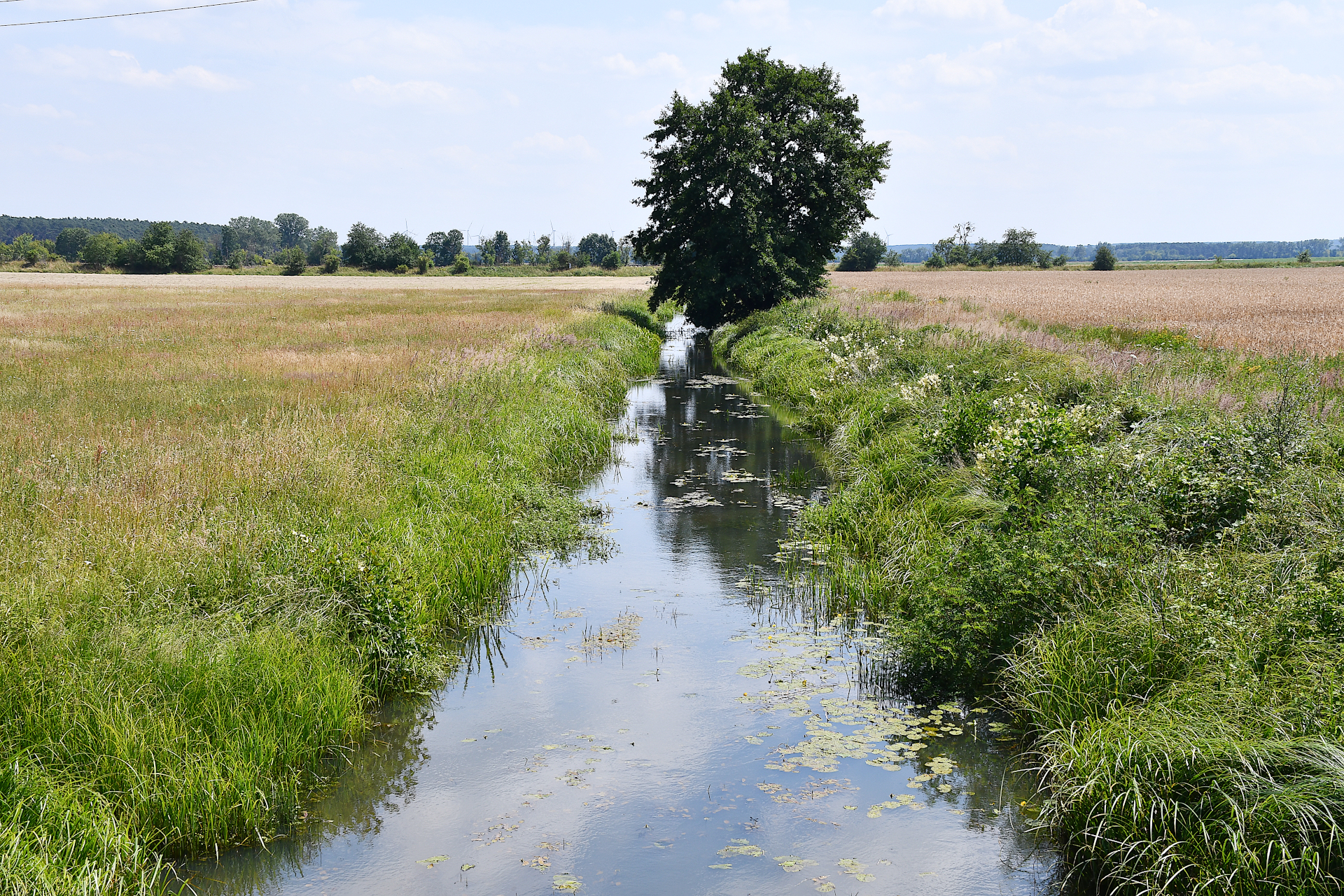
The increase in dry periods during the growing season, some of which last for weeks, poses a challenge for ecosystems and land management. The negative effects of the spring and summer drought are also noticeable today in the lowlands close to groundwater, whose intensive utilisation was only made possible by large-scale drainage. Two-way drainage structures, which can both lower and raise groundwater levels by means of controlled ditch damming, rarely function anymore. In addition to climatic changes, the reason for this is insufficient water retention in the area. Although adaptation to the changed conditions is urgently required, the adaptation process is only progressing slowly. This is due to administrative and economic barriers to improved water retention.

The aim of the project is to develop solutions for water retention that ensure the preservation of agricultural usability while simultaneously improving plant water supply. All sites close to groundwater are being considered, i.e. peat soils and peatland soils as well as mineral sites. The project is being carried out practically in a transdisciplinary network with agricultural enterprises, water associations and the Niederlausitzer Landrücken Nature Park.

In the first sub-project, best-practice examples are being developed together with two farms in southern Brandenburg. These are intended to demonstrate in a transferable manner how the planning and implementation of measures to improve water retention can be approached in concrete terms, how problems that arise can be solved and what effects can be expected on the water balance and for one’s own area of activity. To this end, year-round high water retention on the two farms will be proved at the level of a ditch system and the effects on yields and the landscape water balance will be investigated. The project is flanked by intensive public relations work to disseminate the results and encourage imitation.

The second sub-project is dedicated to the development of a management concept for the Kremitz sub-catchment area, in which the Fichtwald peatland is embedded as the largest fen in southern Brandenburg. The focus is on measures that improve water availability on a catchment area basis, even under progressive climate change. Firstly, various hypotheses must be tested to explain the water shortage in the area. The measures must then be derived, evaluated and planned to such an extent that implementation can begin immediately after the end of the project.

Project Funding

Ministerium für Landwirtschaft, Umwelt und Klimaschutz des Landes Brandenburg

dreieckiconsicons_linie-footer